Overview
The Allow Past Date Appointments setting controls whether users can create or edit appointments with a past date. By default, this setting is disabled, restricting all users from selecting backdated dates during appointment creation or editing. Admin users can enable this setting to allow past date appointments based on business needs. For staff users, an additional staff-level permission must also be granted. This two-layer control ensures that only authorized team members can create or modify backdated appointments, helping maintain accurate scheduling records and preventing unauthorized changes to past bookings.
Navigation Path
Settings → Modules Settings → Appointment → Scheduling Rules
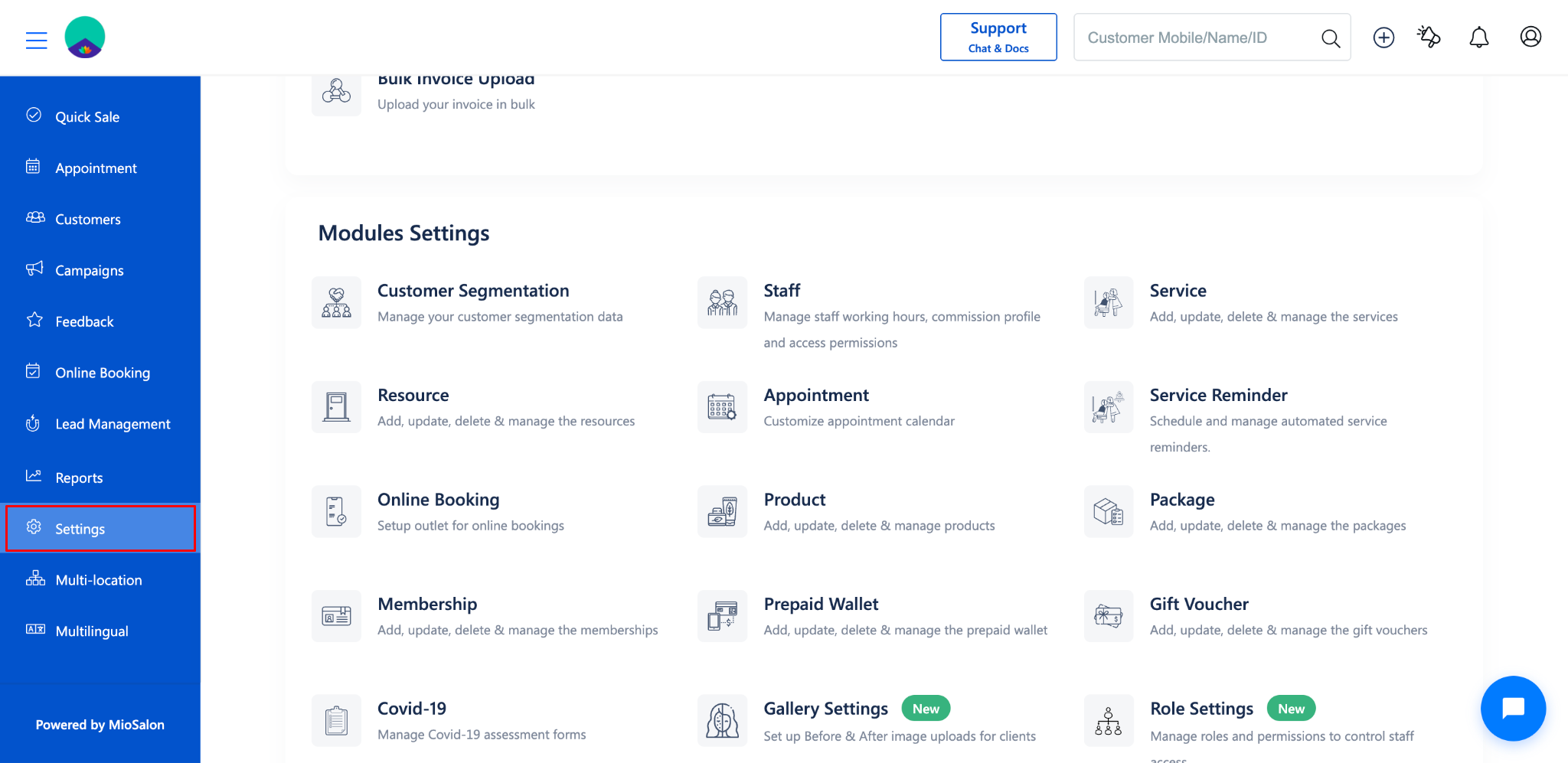
Go to Settings from the left sidebar.
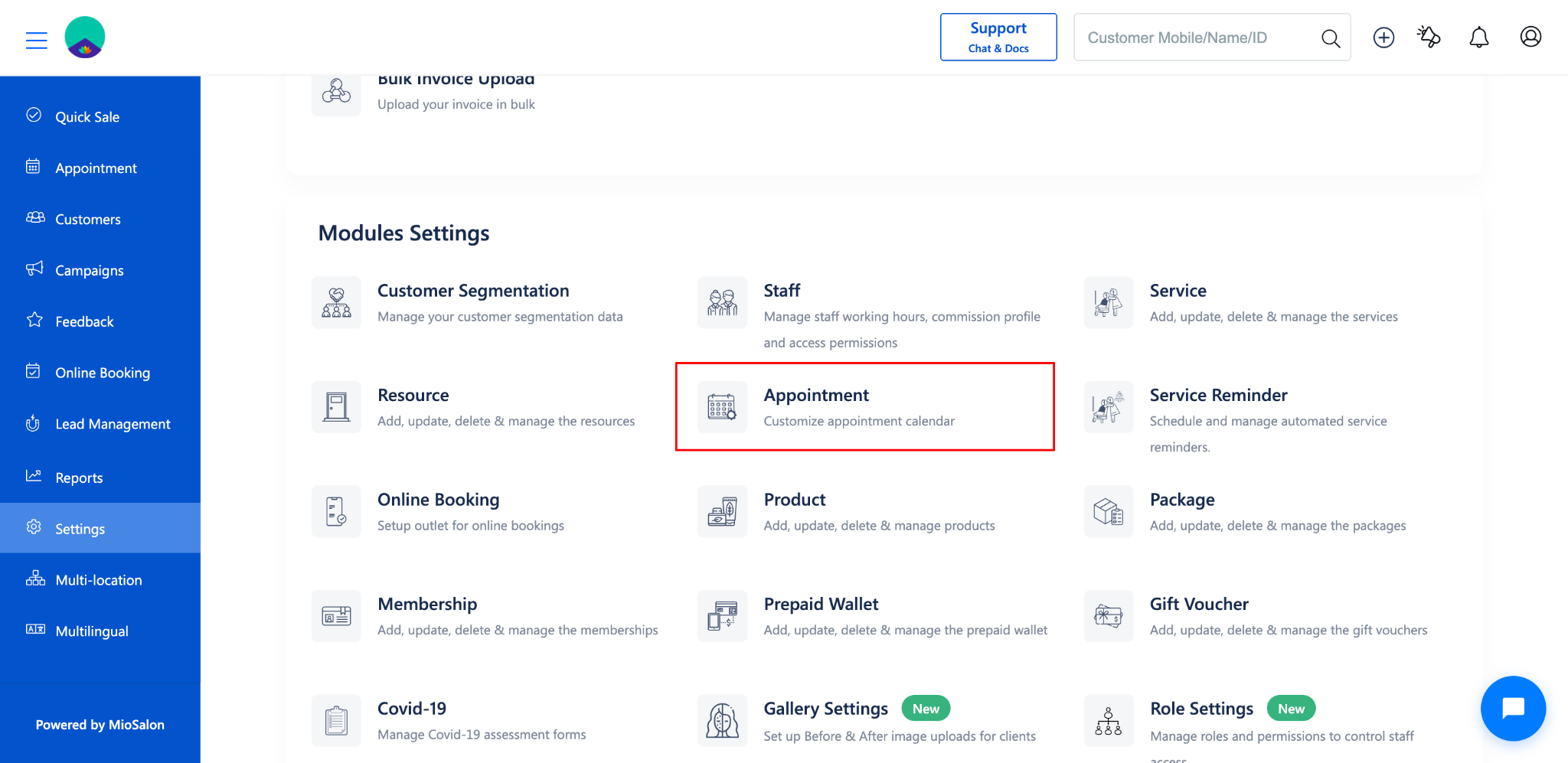
Under Modules Settings, click Appointment.
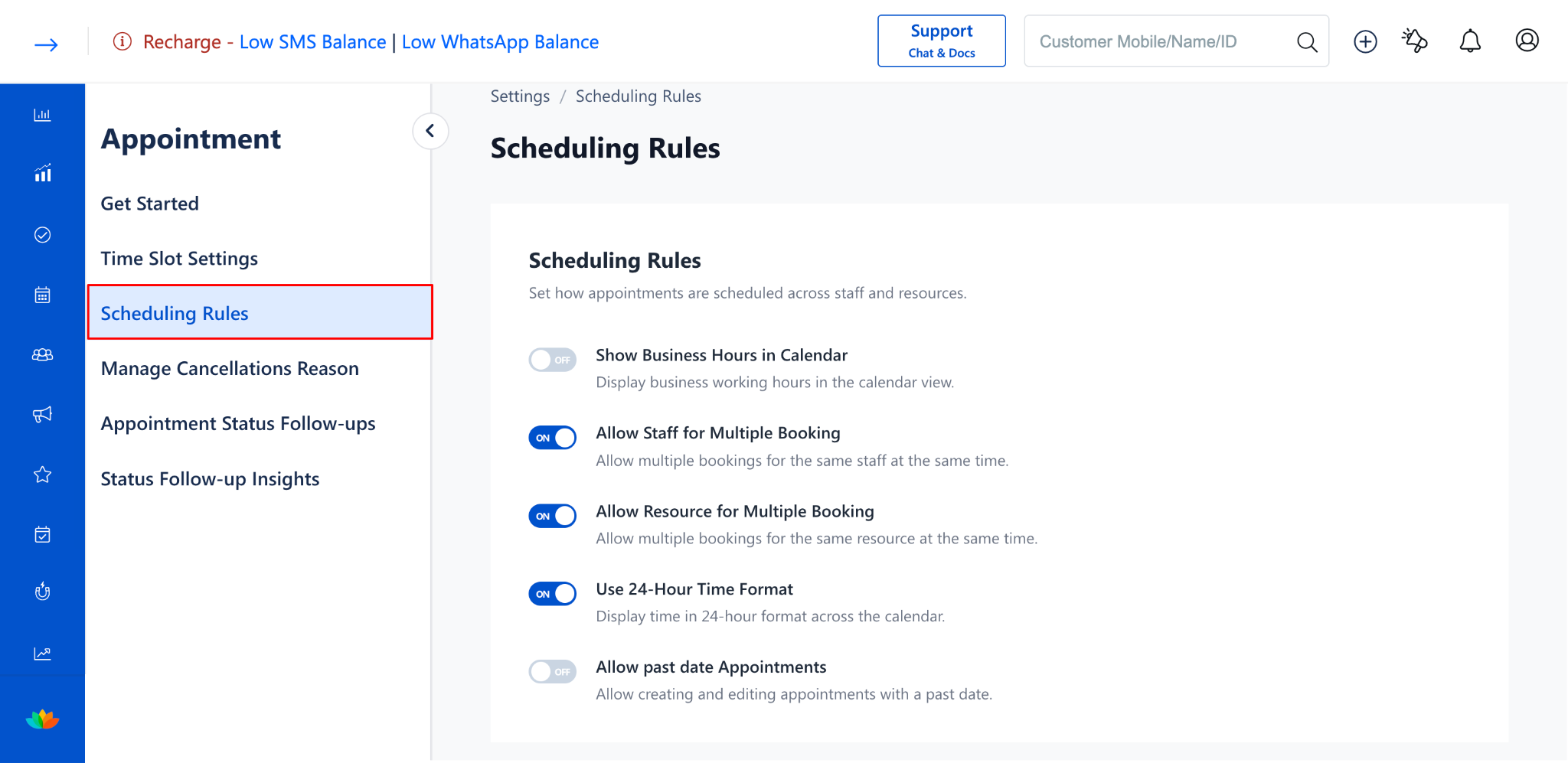
Select Scheduling Rules from the left menu.
Scroll down to locate the Allow past date Appointments toggle.
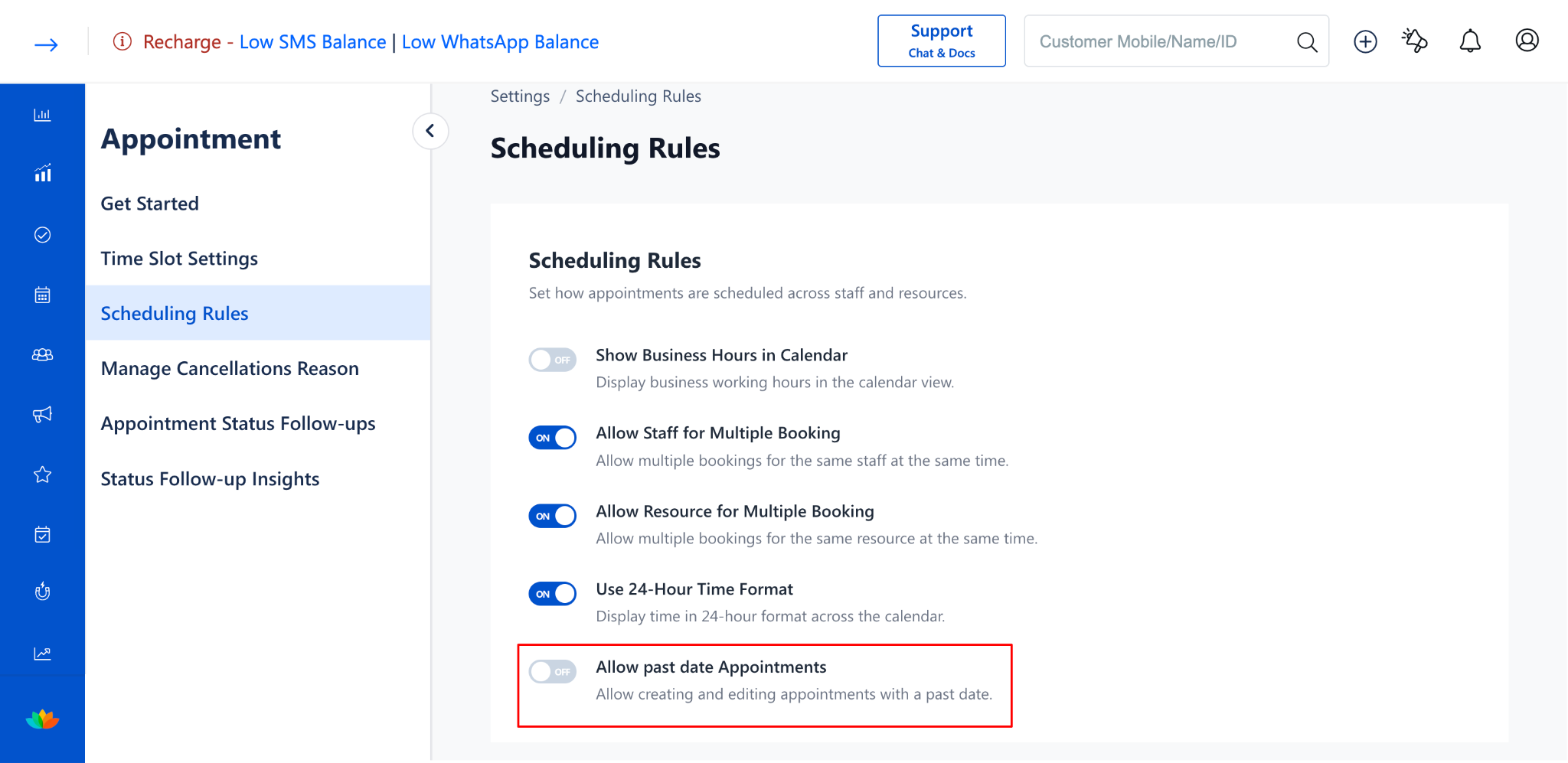
To Enable or Disable Allow Past Date Appointments for Adminusers
Enable the Setting
Navigate to Scheduling Rules under Appointment Settings.
Locate the Allow past date Appointments toggle at the bottom of the Scheduling Rules section.
Toggle it ON to allow creating and editing appointments with a past date.
Click Save to apply the changes.
Disable the Setting
Navigate to Scheduling Rules under Appointment Settings.
Locate the Allow past date Appointments toggle.
Toggle it OFF to restrict users from selecting past dates during appointment creation or editing.
Click Save to apply the changes.
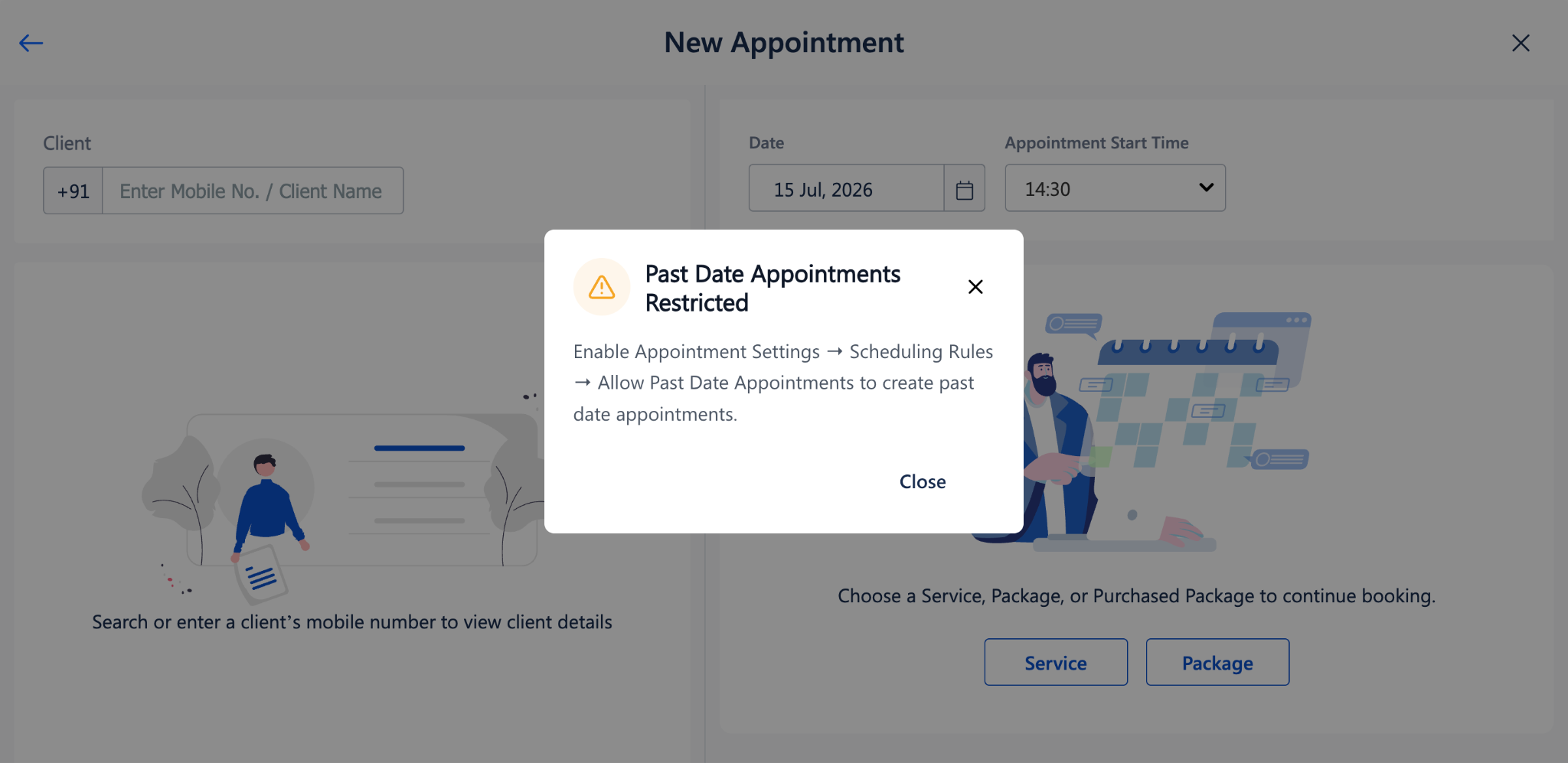
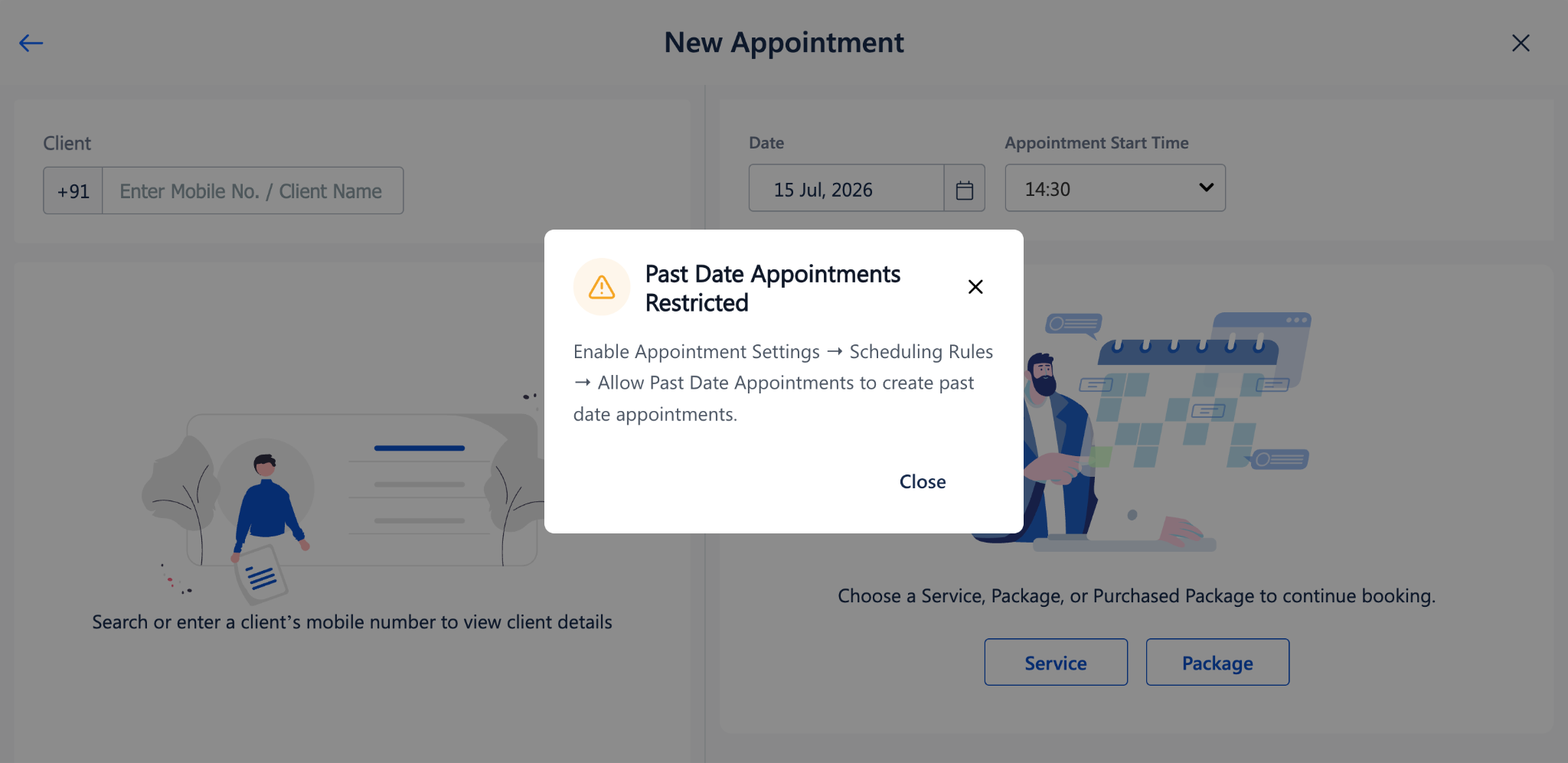
Note: When this setting is disabled and a user tries to select a past date while creating or editing an appointment, a "Past Date Restriction" warning message will appear. The message will guide the user to enable the setting from Appointment Settings. (See Screenshot 3)
How It Works for Admin and Staff Users
Admin User Login
The Admin User can enable or disable the Allow past date Appointments toggle from Scheduling Rules.
When the toggle is ON, the Admin User can create and edit appointments with a past date.
When the toggle is OFF, the Admin User cannot select a past date during appointment creation or editing.
Staff Login
Staff users must satisfy two conditions to create or edit appointments with a past date:
The Allow past date Appointments toggle must be enabled in Scheduling Rules.
The staff-level backdated appointment permission must be enabled for the respective staff user member.
If either condition is not met, the staff user will not be able to select a past date during appointment creation or editing.
Behavior Comparison: Admin vs Staff Users
How to Enable Staff User Permission for Backdated Appointments
Go to Settings from the left sidebar.
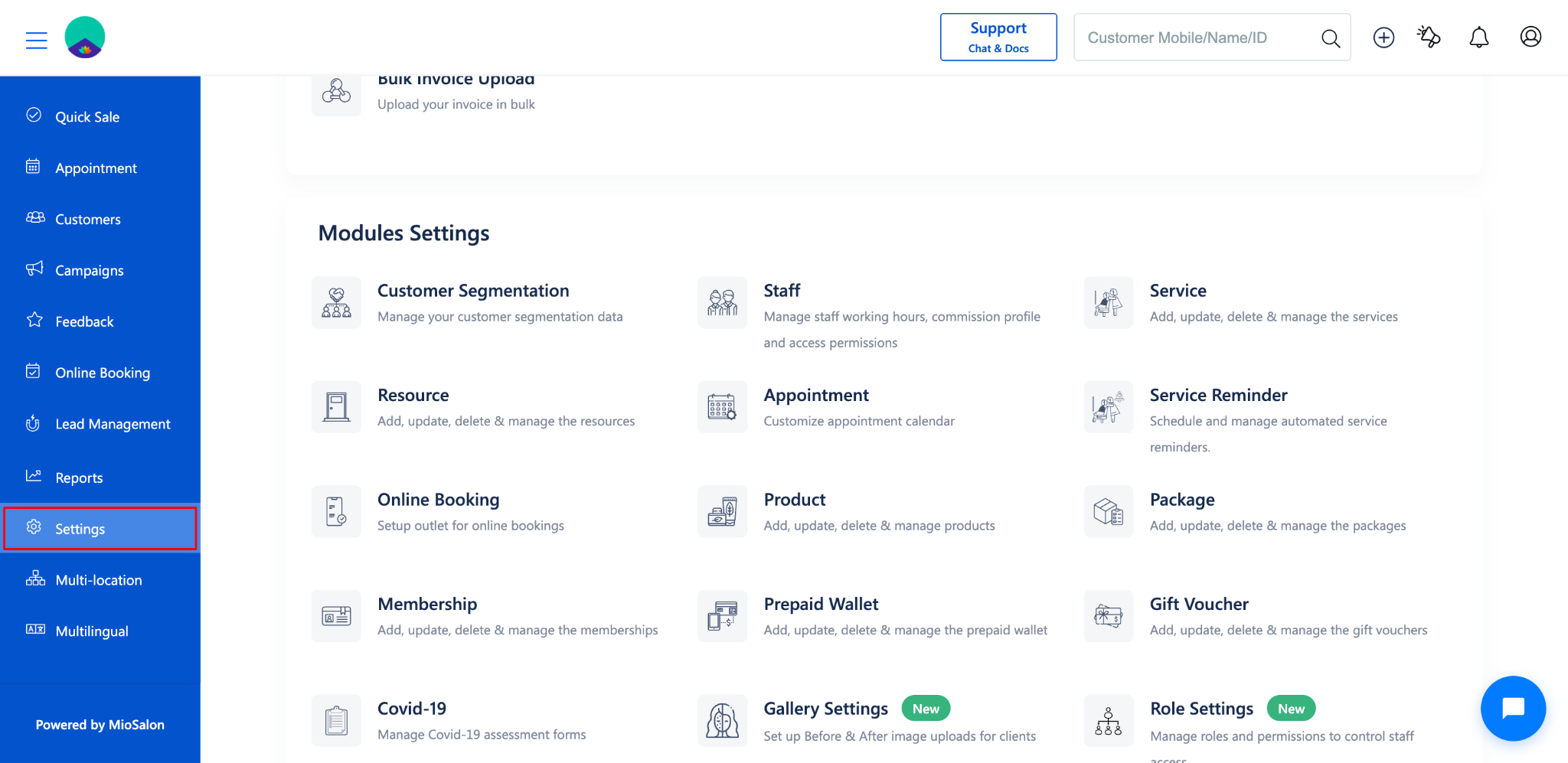
Under Modules Settings, click Staff.
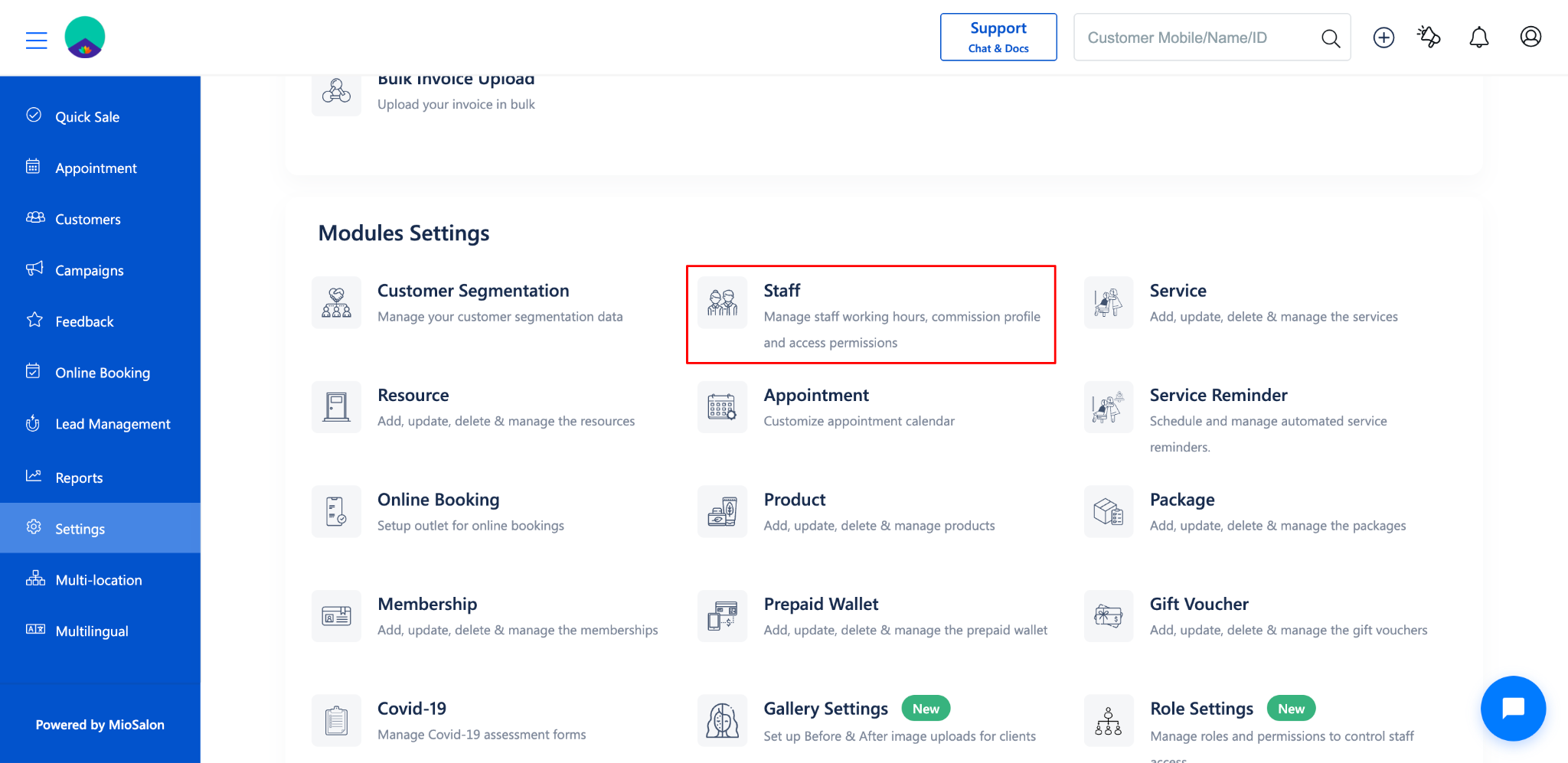
Select the staff member you want to grant access to.
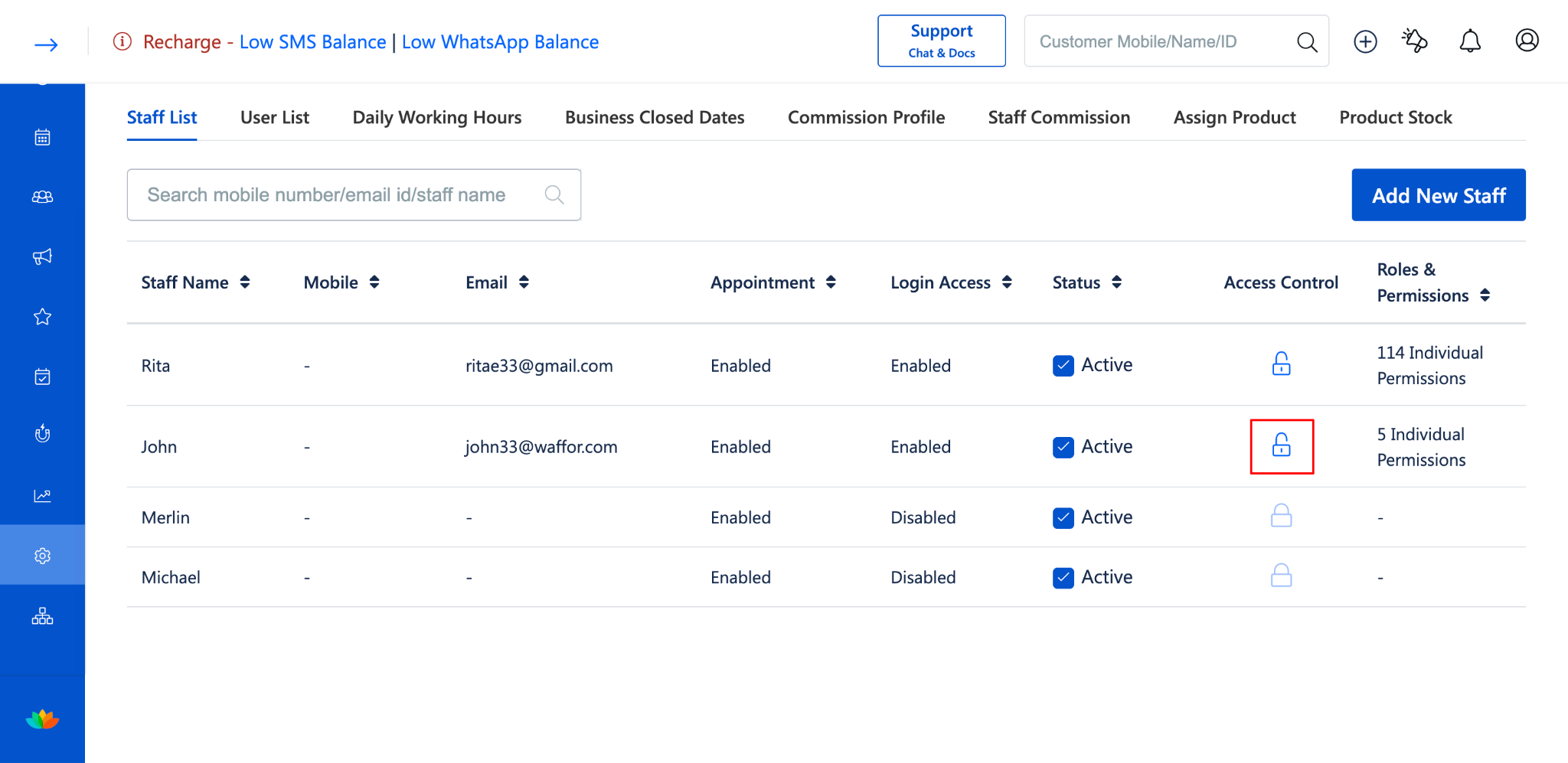
Navigate to the Permissions or Access Permissions section.
Locate the backdated appointment permission toggle.
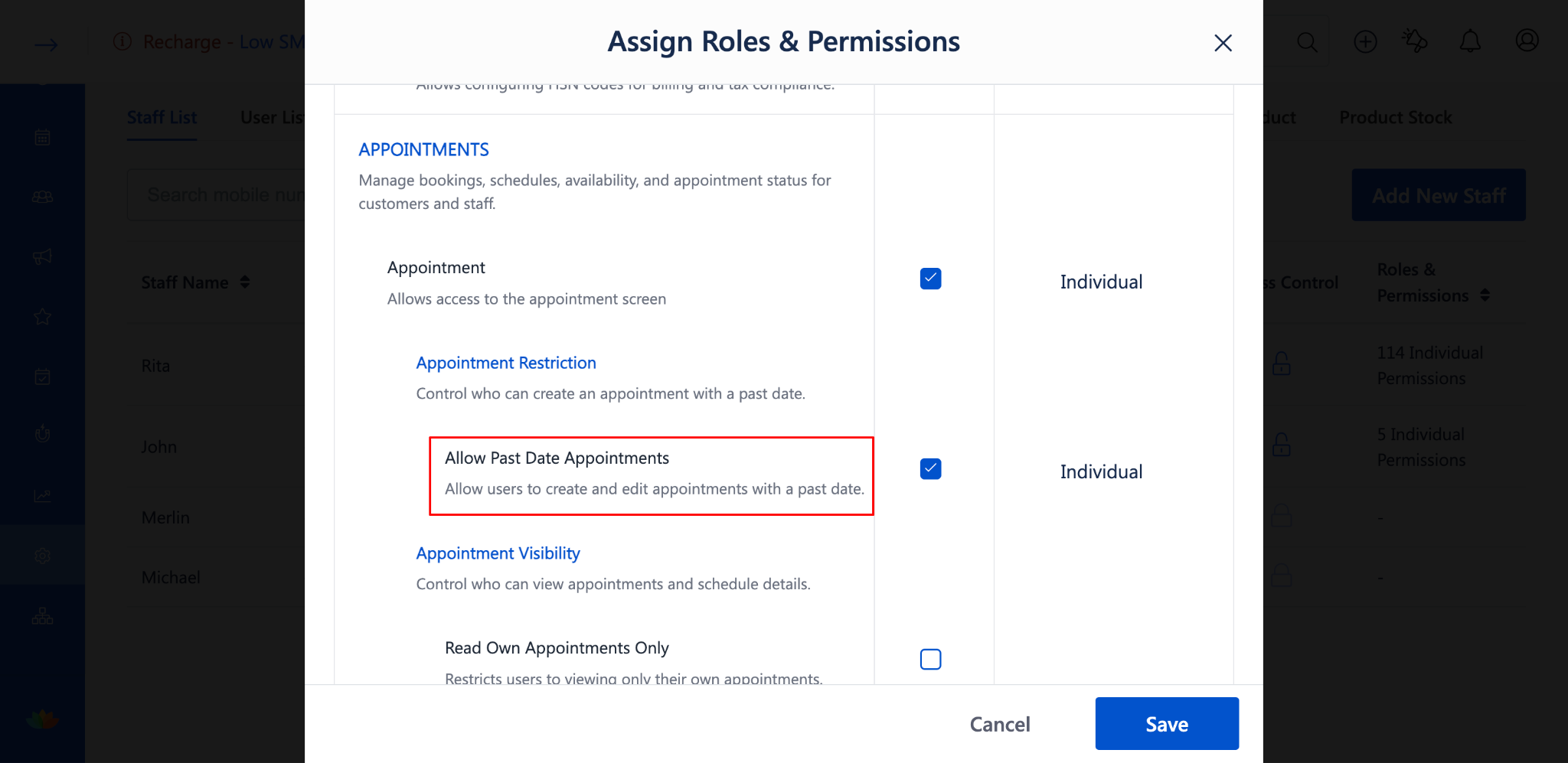
Toggle it ON to allow the staff User to create and edit backdated appointments.
Click Save to apply the changes.
Note: Even after enabling the staff permission, the Allow past date Appointments toggle in Scheduling Rules must also be enabled. Both conditions must be satisfied for staff users.
Restriction Behavior
When a user (Admin or Staff Users) tries to select a past date while creating a new appointment and the required conditions are not met, a Past Date Restriction warning dialog will appear.
The warning message for Admin : "Enable Appointment Settings > Scheduling Rules > Allow Past Date Appointments to create past date appointments."
3. The warning message for Staff Users : "To create past date appointments, ask your administrator to enable Appointment Settings → Scheduling Rules → Allow Past Date Appointments and grant Staff Permissions on Allow Past Date Appointments access."
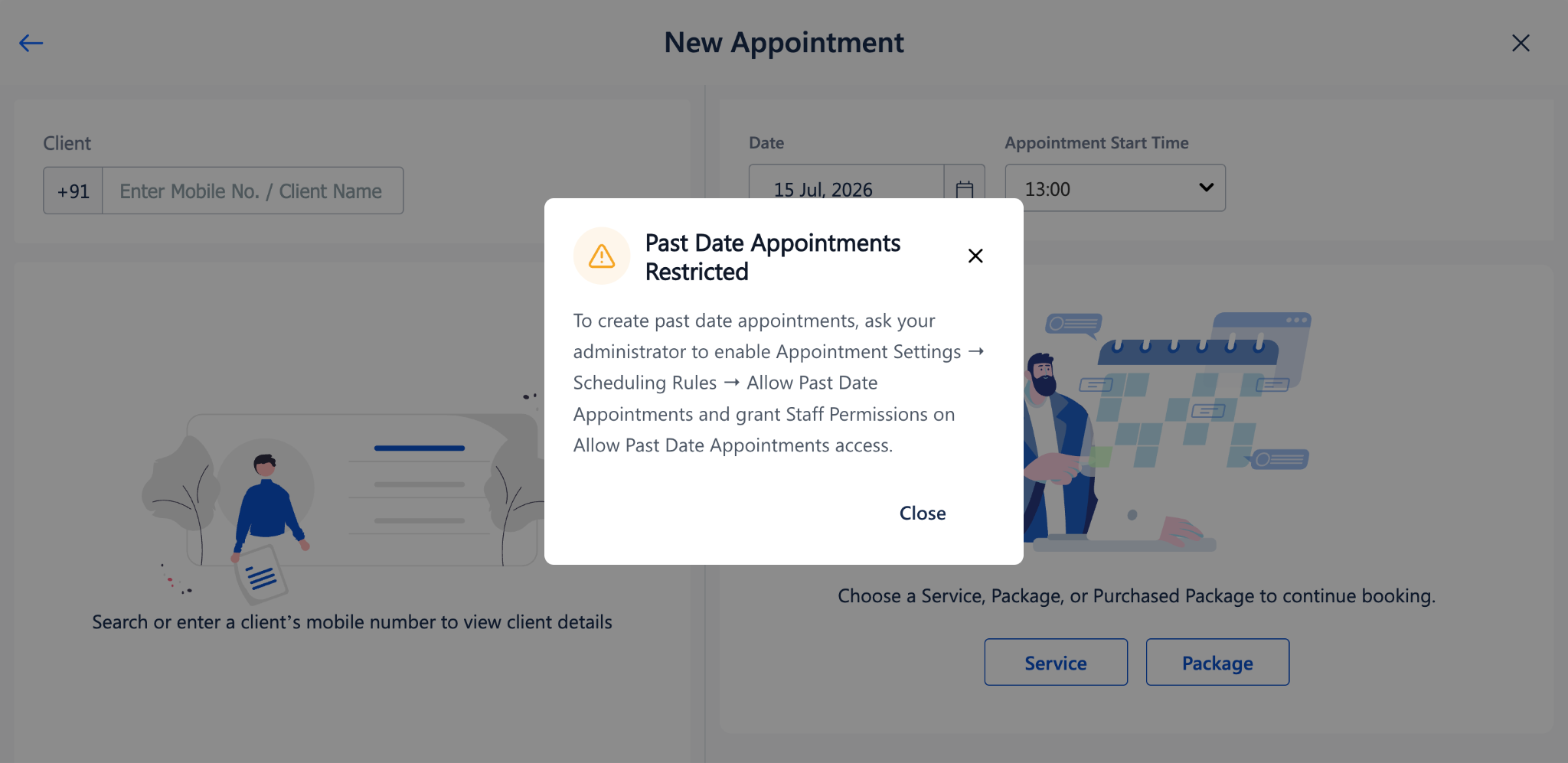
5. Click Close to dismiss the dialog and select a valid date.
Use Cases
Salon correcting missed entries: Enable the toggle to allow the front desk to log appointments that were completed but not entered into the system on the same day.
Controlled access for staff: Keep the toggle enabled but restrict staff permission so only managers or senior staff can create backdated appointments.
Strict record-keeping business: Keep the toggle disabled to ensure all appointments are created for the current or future dates only, maintaining clean scheduling records.
Multi-branch salon chain: Enable the toggle with selective staff permissions to allow branch managers to handle backdated entries while restricting regular staff.
Benefits
Maintain accurate appointment records by controlling who can create or modify past date entries.
Provide flexibility for businesses that need to log missed or delayed appointment entries.
Add a second layer of control through staff-level permissions, ensuring only authorized personnel can backdate appointments.
Reduce unauthorized or accidental changes to past appointment data.
Keep a clean and reliable appointment history for reporting and auditing purposes.
Was this article helpful?
That’s Great!
Thank you for your feedback
Sorry! We couldn't be helpful
Thank you for your feedback
Feedback sent
We appreciate your effort and will try to fix the article